TrackFood
People don't waste food because they don't care. They waste food because they forget.
MY ROLE
UX/UI Design Lead
(User Research · Synthesis · Wireframing · High-fidelity Design · Iteration)
TIMELINE
3 weeks
Project Overview
TrackFood is a concept mobile app designed to help people reduce food waste by making groceries visible, trackable, and actionable.
The project focused on redesigning how users track what they own, what’s expiring, and how to use ingredients before they go to waste.
THE CHALLENGE
People forget what they already have in their fridge or pantry, leading to duplicate purchases, expired food, and wasted money.
Existing solutions rely too heavily on manual input, making them difficult to maintain over time.
OBJECTIVE/GOAL
Design Process
Research
EMPATHIZE
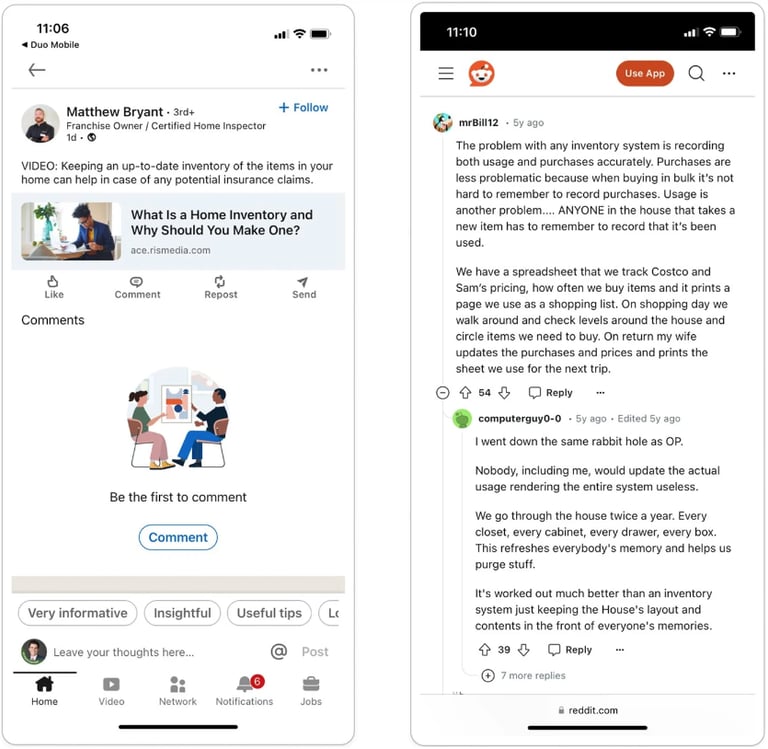
User Interviews & Secondary Research
We conducted user interviews with 9 participants to understand real grocery behaviors, tracking habits, and pain points around food waste.
Key Questions
Project Goals
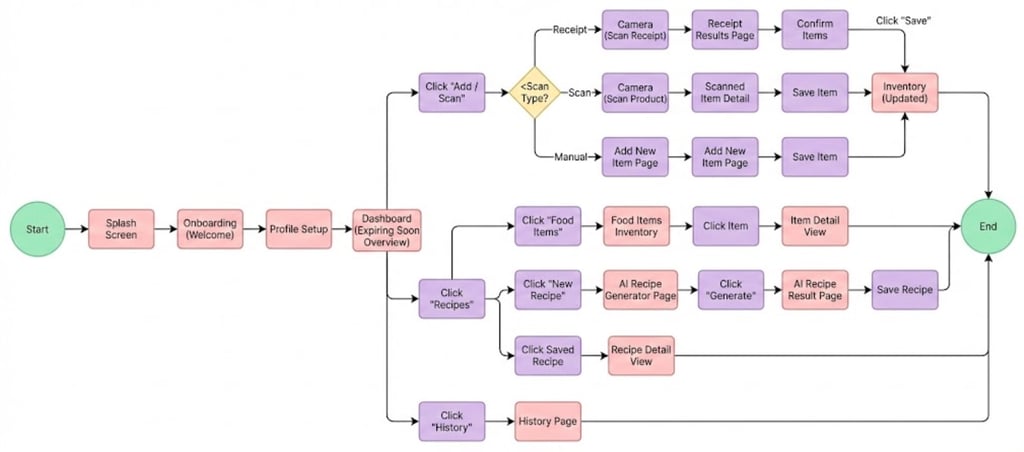
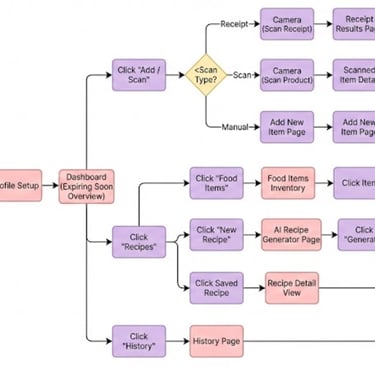
User Flow
Low - Mid Fidelity Wireframes
Branding
Result
Usability Testing
100%
Inventory Awareness
3 X
Faster Grocery Input
80%
Action Rate Through AI Recipes
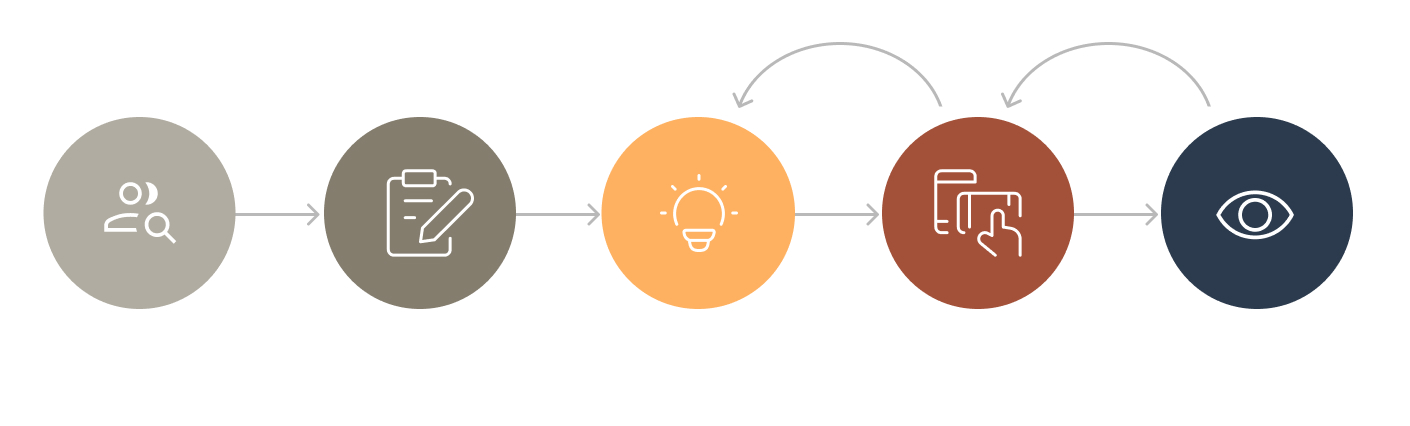
EMPATHIZE
DEFINE
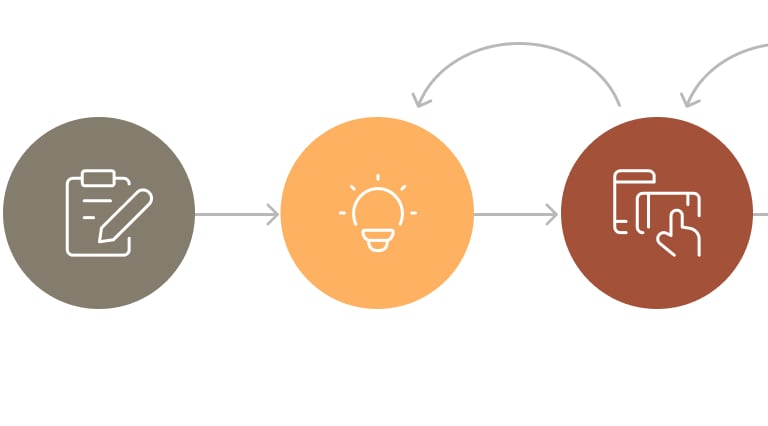
IDEATE
PROTOTYPE
TEST
ITERATE
ITERATE
Design an experience that helps users:
See what they already have
Know what’s expiring soon
Act before food goes to waste — with minimal effort
The goal was not just tracking, but turning awareness into everyday action.
TEAM
3 UX designers (team project)
Conducted 9 total user interviews
I led synthesis, design direction, and final design decisions


FOUND
I don't want to manually log everything".
I want reminders before food goes bad-not after".
I want to know what I have at a glance".
"
"
"
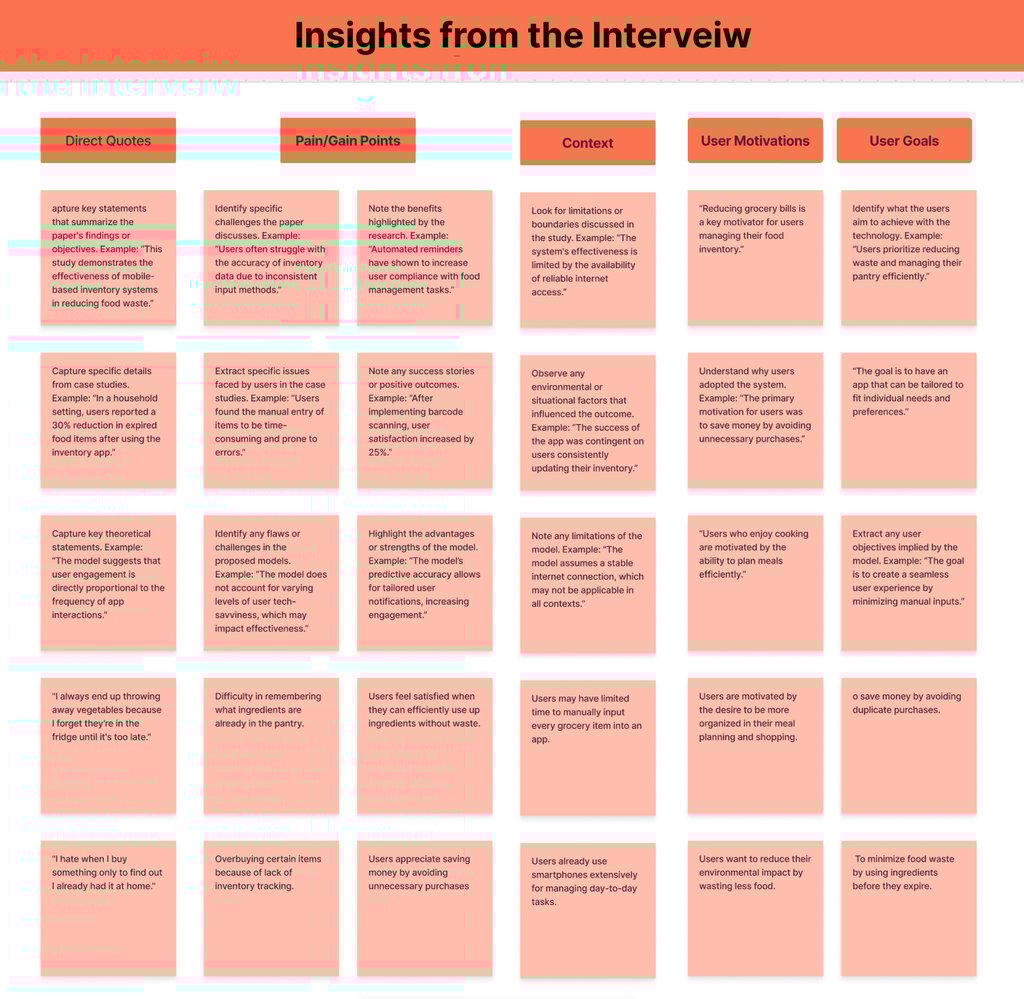
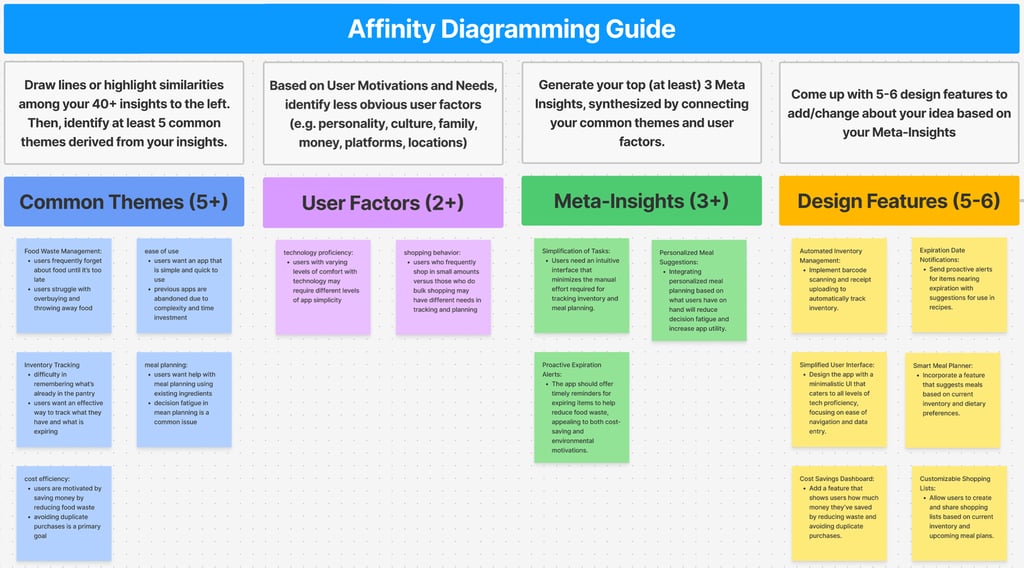
Affinity Diagramming
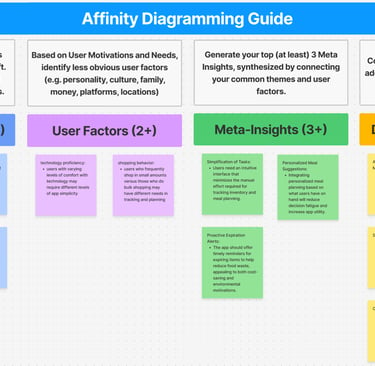
To synthesize over 40+ insights, we clustered findings into themes, user factors, and meta-insights.
Common Themes
Forgetfulness leads to waste
Manual tracking doesn’t scale
Users want help using what they already own
Cost savings motivate behavior change
User Factors
Different levels of tech comfort
Mixed shopping habits (bulk vs frequent small trips)
Meta-Insights
Visibility reduces waste more than control
Automation builds sustainable habits
Reminders must feel helpful, not nagging
These insights directly informed feature prioritization.
How do people currently track groceries and expiration dates?
Where do existing systems break down?
What prevents users from maintaining tracking habits long-term?
Fragmented Memory
Users rely on mental notes or scattered lists, which quickly fail after a few days.
High Friction
Manual tracking feels tedious and is often abandoned.
Low Visibility
People don’t see urgency until food is already expired.
Reduce food waste through visibility


Minimize manual effort via automation
Encourage action through timely nudges
High Fidelity Prototype
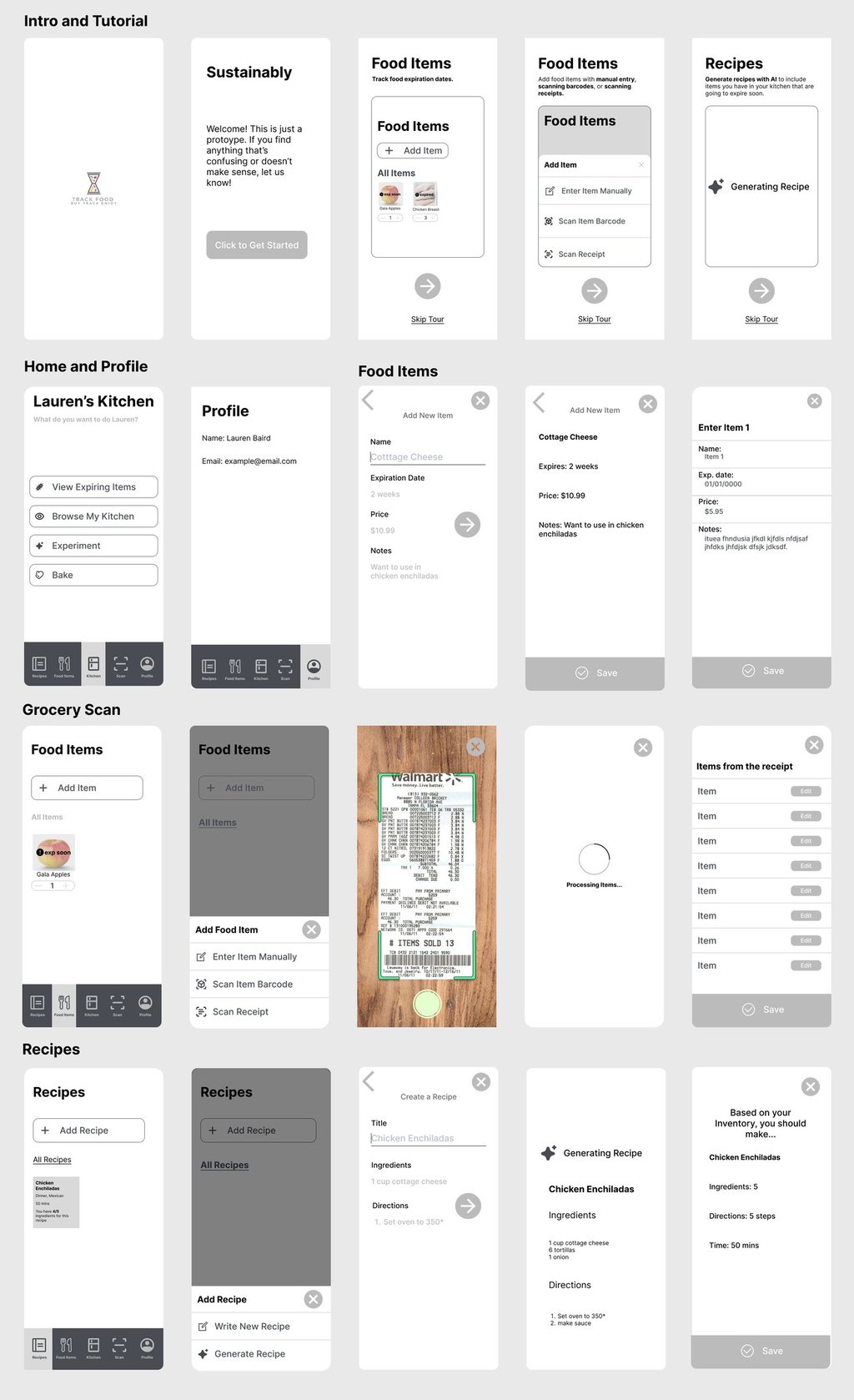
Low–mid fidelity wireframes were used to test how users naturally think about their groceries—what they want to see first, what feels urgent, and where friction appears when adding items. By stripping away branding and visual detail, I focused on validating core flows: inventory visibility, expiration awareness, and effortless input through scanning. These wireframes helped reveal early friction points, such as hesitation during manual entry and confusion around item organization, which directly informed the decision to prioritize automation and simplified categorization in later iterations.
Food waste doesn’t come from carelessness—it comes from busy lives, forgotten groceries, and invisible expiration dates.
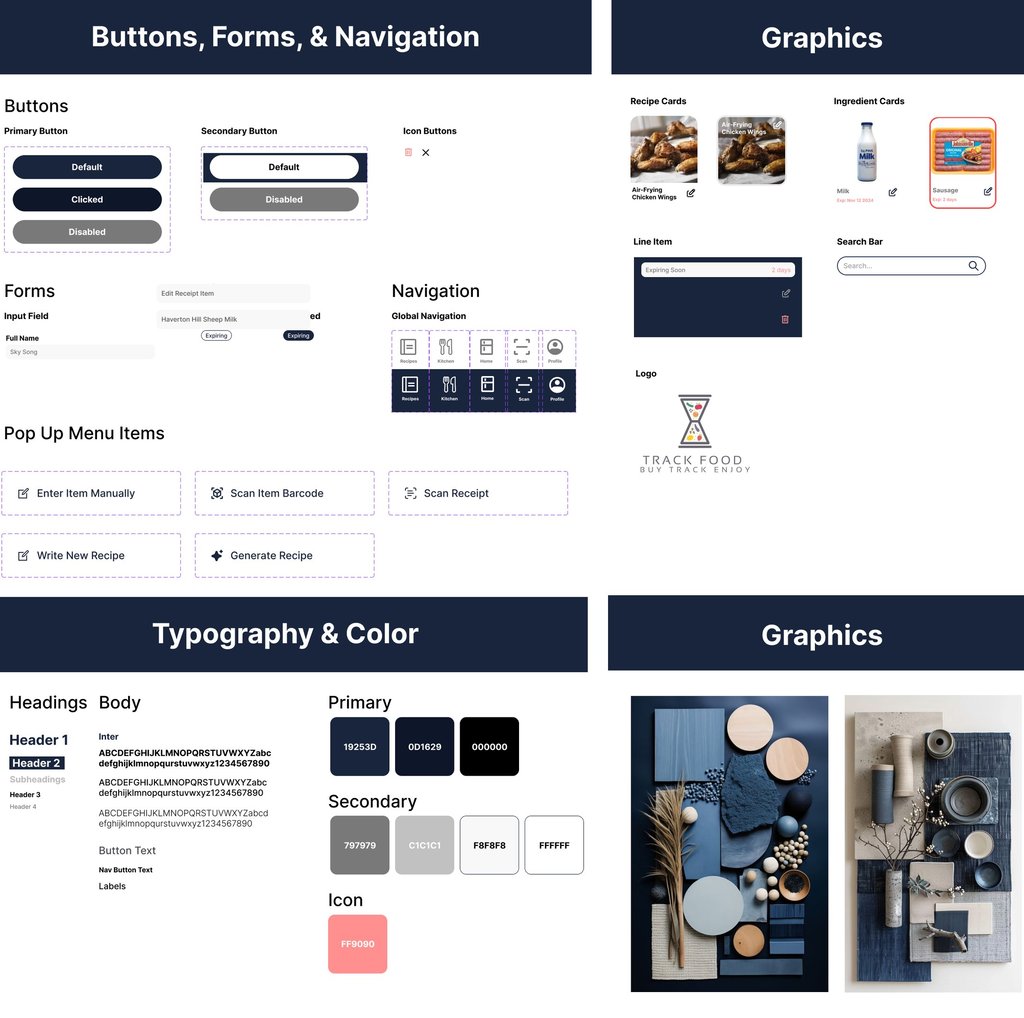
TrackFood’s branding was designed to meet users in that reality, replacing guilt and frustration with calm clarity.
Soft, neutral colors and generous spacing reduce visual noise, while clear typography and gentle alerts guide attention without pressure.
Instead of warning users that something is “wrong,” the interface quietly reminds them what they already have and what they can still use.
Every visual choice was intentional: to make everyday decisions feel lighter, more human, and easier to act on—turning a moment of stress in the kitchen into a sense of control.
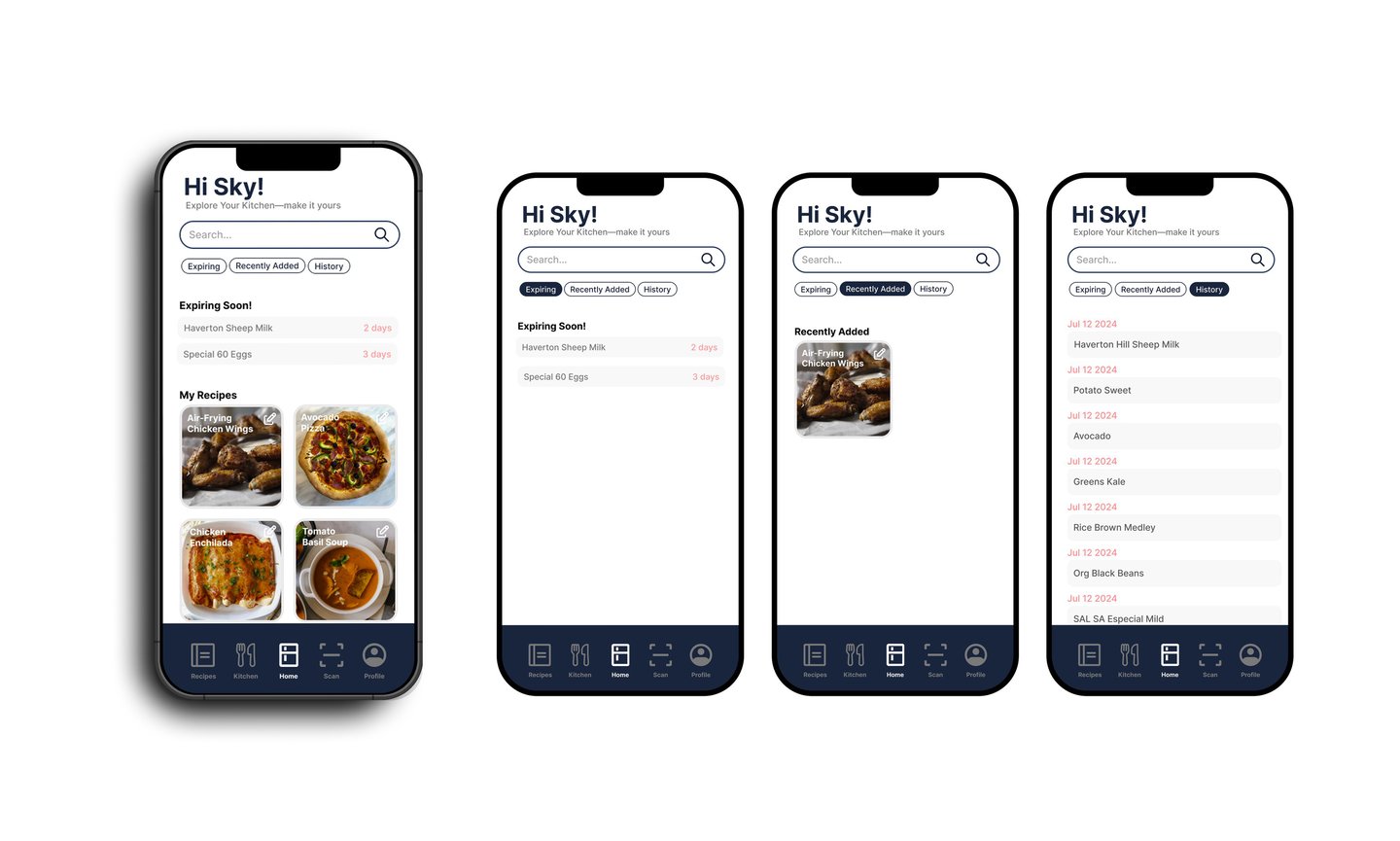
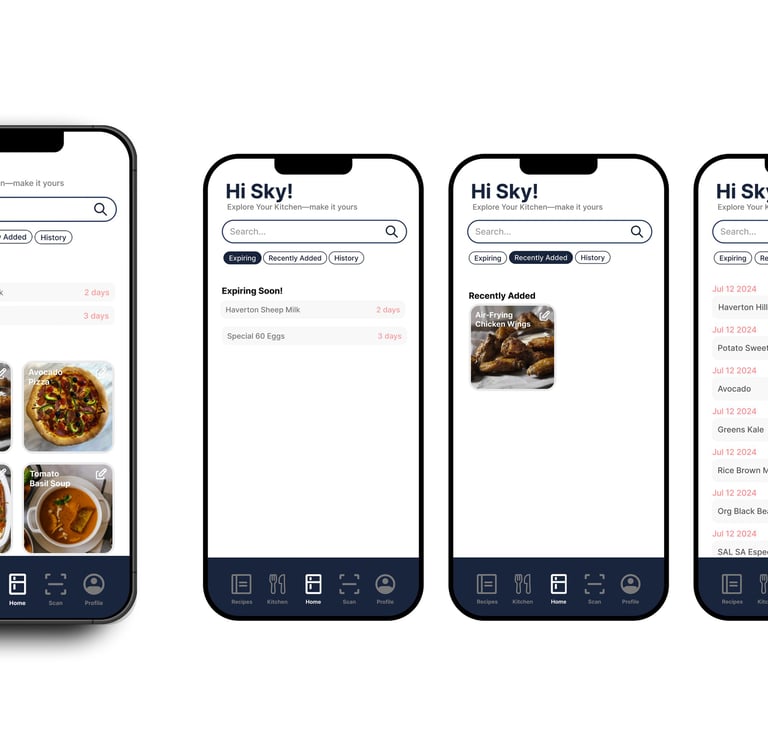
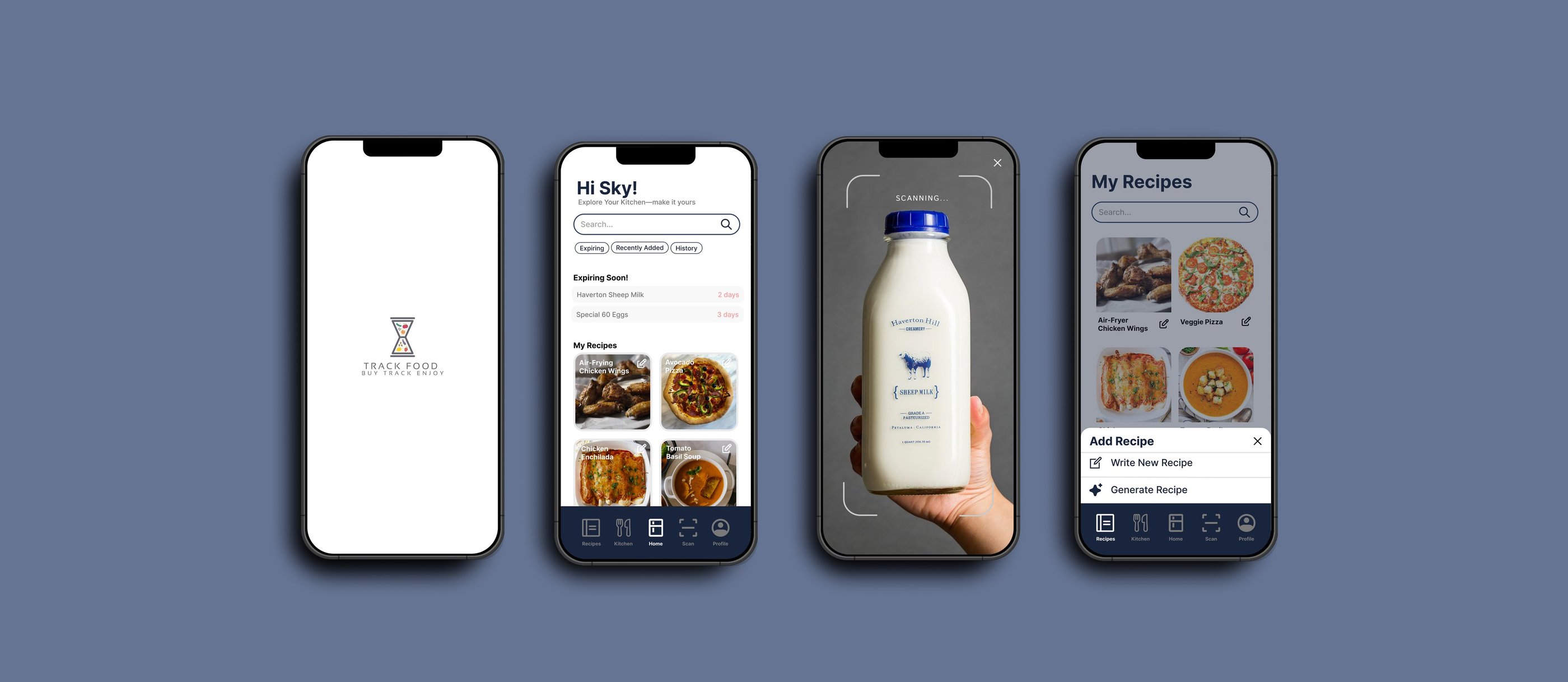
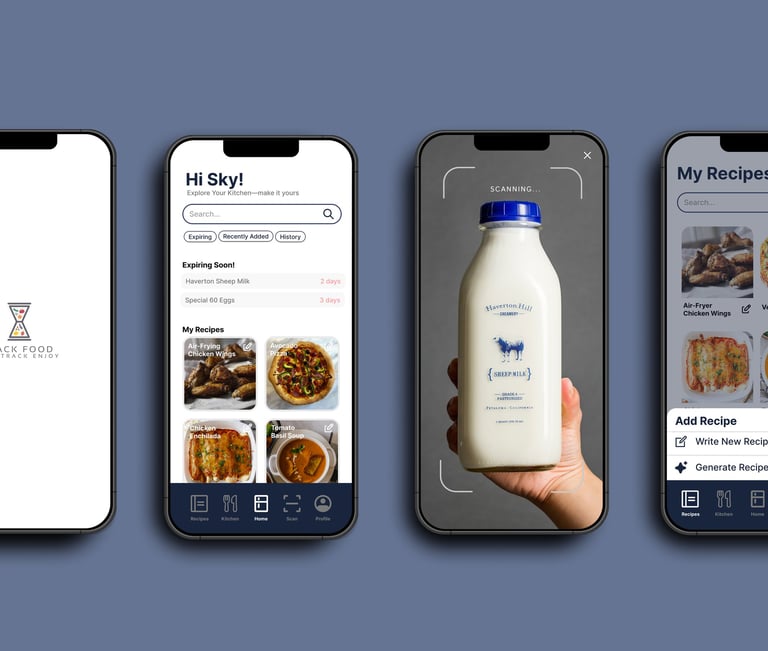
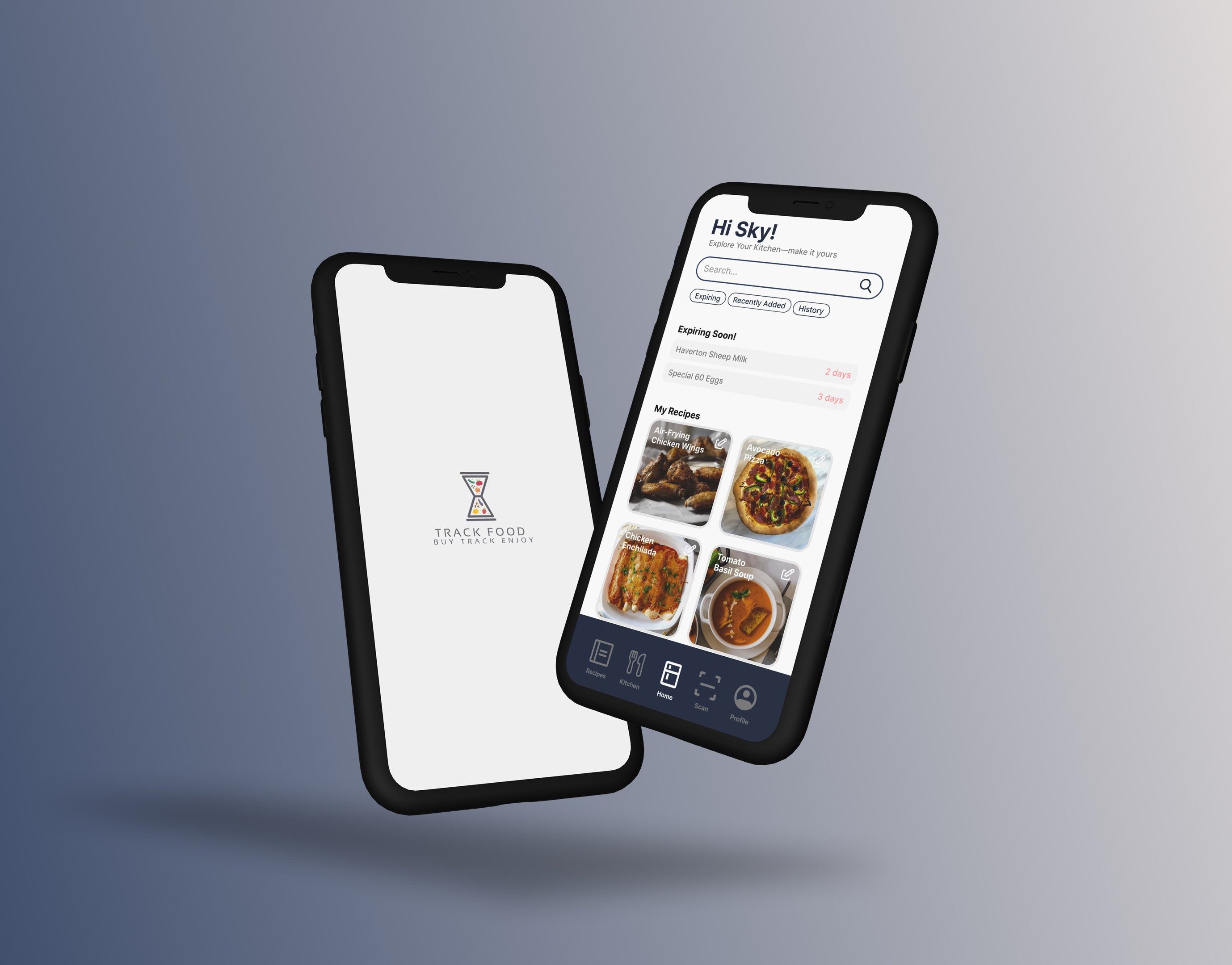
The high-fidelity prototype focuses on moments users typically forget or disengage—after shopping and before food expires.
By surfacing urgency, simplifying input through smart scanning, and connecting ingredients to recipes, TrackFood turns awareness into action and reduces everyday food waste.
Usability testing was conducted with 9 participants to evaluate whether TrackFood effectively reduced friction around grocery tracking and encouraged action to prevent food waste. Tasks mirrored real-life friction points: post-shopping organization, kitchen management, and meal planning with available ingredients.
Test Scenarios
Scenario 1: You’ve just finished grocery shopping. Add new items to your inventory and identify what will expire soon.
Scenario 2: Scan a receipt or barcode to batch-add items, review the results, and correct any errors.
Scenario 3: You have ingredients about to expire. Use the recipe feature to decide what to cook.
Metrics Tracked
Time on Task: Time taken to add items and identify expiring food.
Task Success Rate: Percentage of tasks completed without assistance.
Error Recovery: Ease of fixing scanning errors without frustration.
Ease of Use: Participant rating on a scale of 1–5.
Behavioral Outcome: Frequency of users choosing to cook with expiring ingredients after viewing suggestions.
Success Criteria
Inventory clarity is immediate. Users understand what they have and what is expiring within seconds.
Scanning reduces effort, not certainty. Users can add groceries quickly via barcode or receipt, with intuitive error recovery.
Recipes motivate action. Users are encouraged to use existing ingredients rather than letting them go to waste.
By combining visibility, automation, and motivation, TrackFood transforms food management from a burdensome chore into a guided habit.
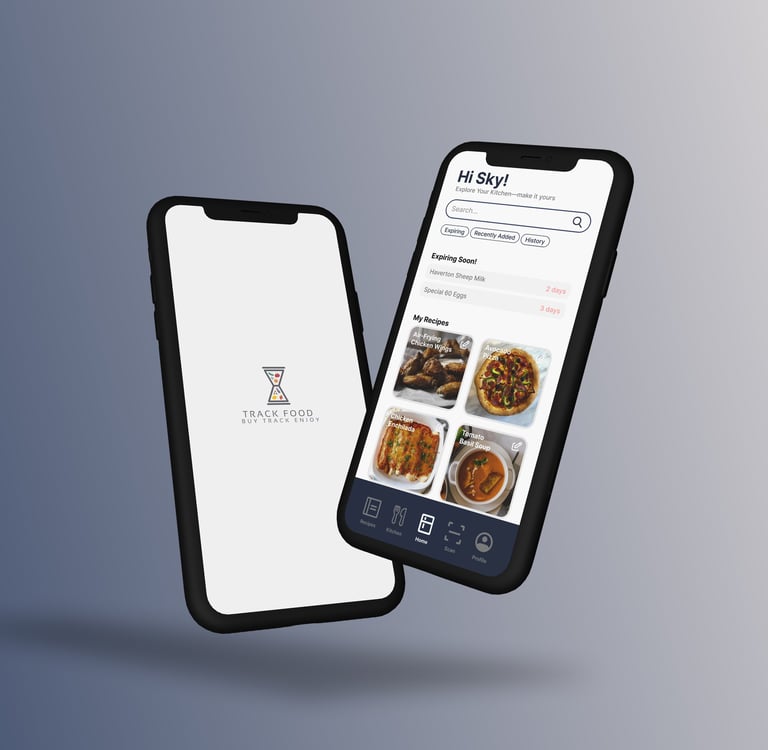
The inventory dashboard gives users immediate clarity on what they have and what needs attention.
Items are organized by urgency—expiring soon, recently added, and history—so users don’t need to remember or search. Subtle alerts turn awareness into timely action before food becomes waste.
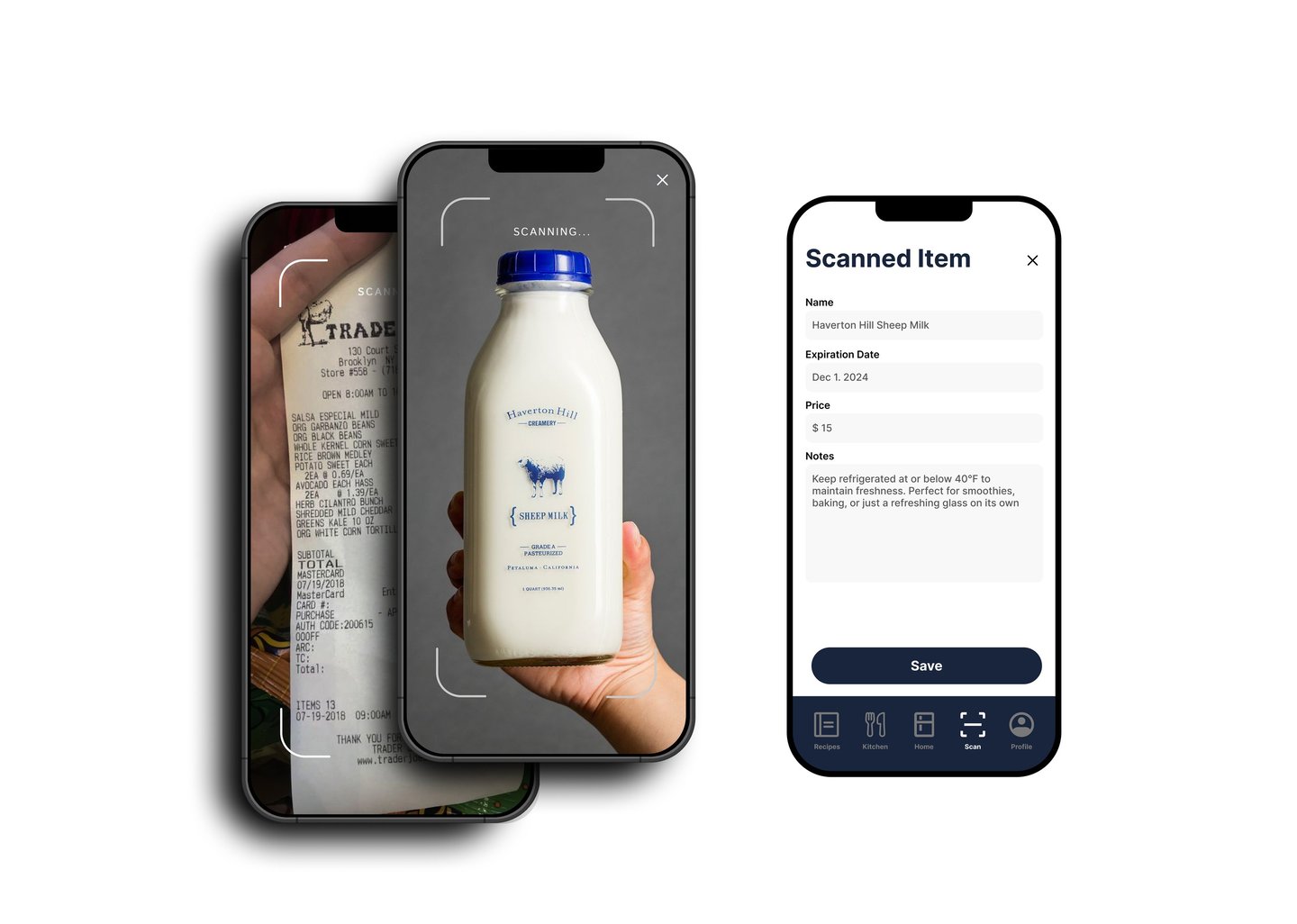
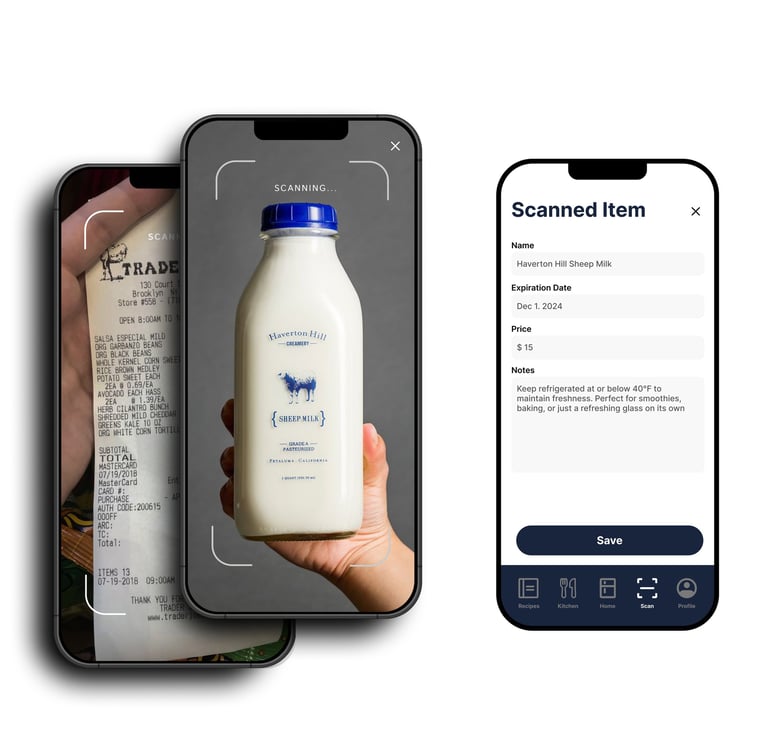
Smart Scanning reduces the effort of tracking groceries by making input fast and forgiving.
Users can scan a receipt or barcode, review detected items, and make quick edits before saving—building trust in automation while keeping users in control.
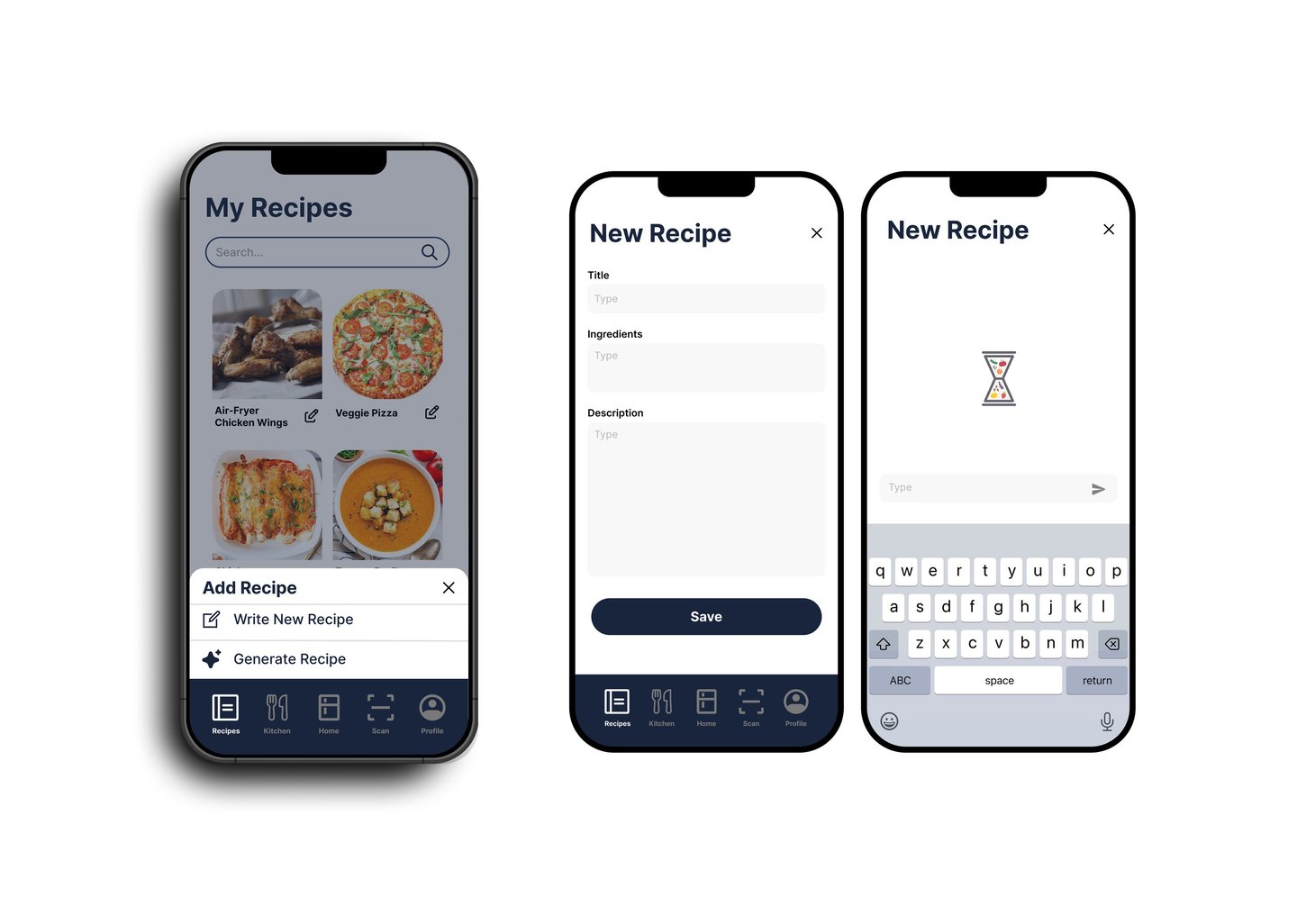
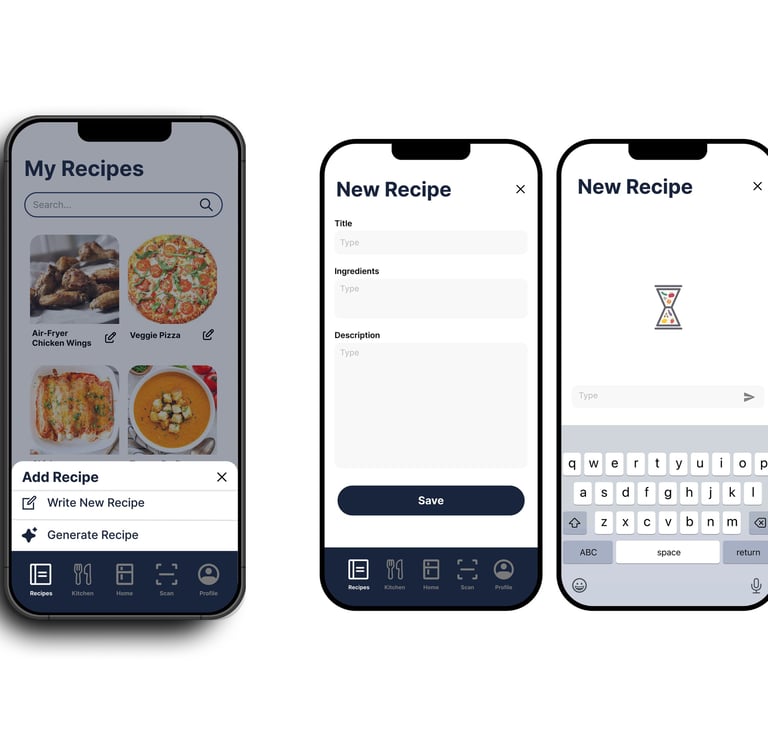
AI recipe suggestions connect inventory to action.
By recommending meals based on ingredients already on hand, the experience helps users use what they have, reduce waste, and feel confident instead of overwhelmed when deciding what to cook.
Inventory Dashboard & Expiration Alerts
Smart Scanning Experience
AI Recipe Suggestions
User Feedback & Iteration
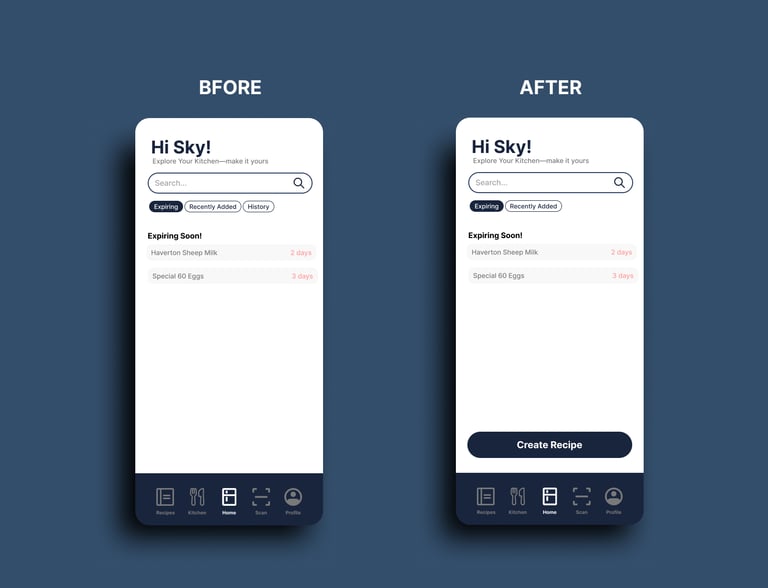
During usability testing, 4 users shared that while expiration alerts were helpful, taking action still required too many steps. Users wanted a faster, more direct way to turn “this is expiring” into “what should I cook now?”
“If I see something is about to expire, I just want to know what I can make with it—without jumping between screens.”
“I don’t want to remember ingredient names or go search for recipes again. I want the app to handle that part.”
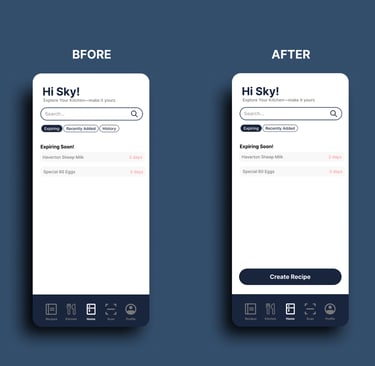
To address this feedback, I introduced a Create Recipe action directly within the Expiring Soon view.
By placing a clear call-to-action at the moment of urgency, users can generate AI-powered recipes with a single tap—automatically using the expiring ingredients.
Future Impact
Designing TrackFood taught me that good UX isn’t about adding features—it’s about removing hesitation.
I learned how powerful it is to design for real-life drop-off moments, where users feel tired, rushed, or overwhelmed. By reducing cognitive load and placing the right action at the right moment, design can gently guide behavior without pressure.
Most importantly, this project reinforced that thoughtful UX can drive real change—turning everyday frustration into sustainable habits through clarity, restraint, and trust.
TrackFood lays the foundation for a more intentional relationship between people and the food they buy.
As the product evolves, deeper automation and smarter AI can further reduce friction—predicting expiration more accurately, improving scan confidence, and tailoring recipe suggestions to user habits. With continued iteration, TrackFood has the potential to move beyond tracking and become a daily decision-support tool that helps households waste less, spend smarter, and cook with confidence.
At scale, small moments of action—using one ingredient before it expires—can compound into meaningful environmental and financial impact.
Lessons
SKY SONG
Contact
haneulisstudying@gmail.com
385) 307 6810